
Transition Center Overview
The official Transition Center of St. Louis page describes a Missouri Department of Corrections facility operated through the Division of Probation and Parole. It is a residential reentry and community release center. It should not be described as a county jail, city jail roster site, police lockup, or local booking facility. The official DOC page lists the facility at 1621 North First Street and names Chris Sarchett as superintendent with a DOC email contact.
DOC says Missouri transformed an aging community release center into the remodeled Transition Center in 2017. The program gives housing and structured services to men released from adult institutions or under community supervision. Residents work on employment readiness, education, treatment, life skills, family reunification, parenting, money management, and discharge planning. Two wings are devoted to education, programming, and group activities, and computer labs support education and job-search work.
The DOC source below shows the Transition Center contact block and program description.
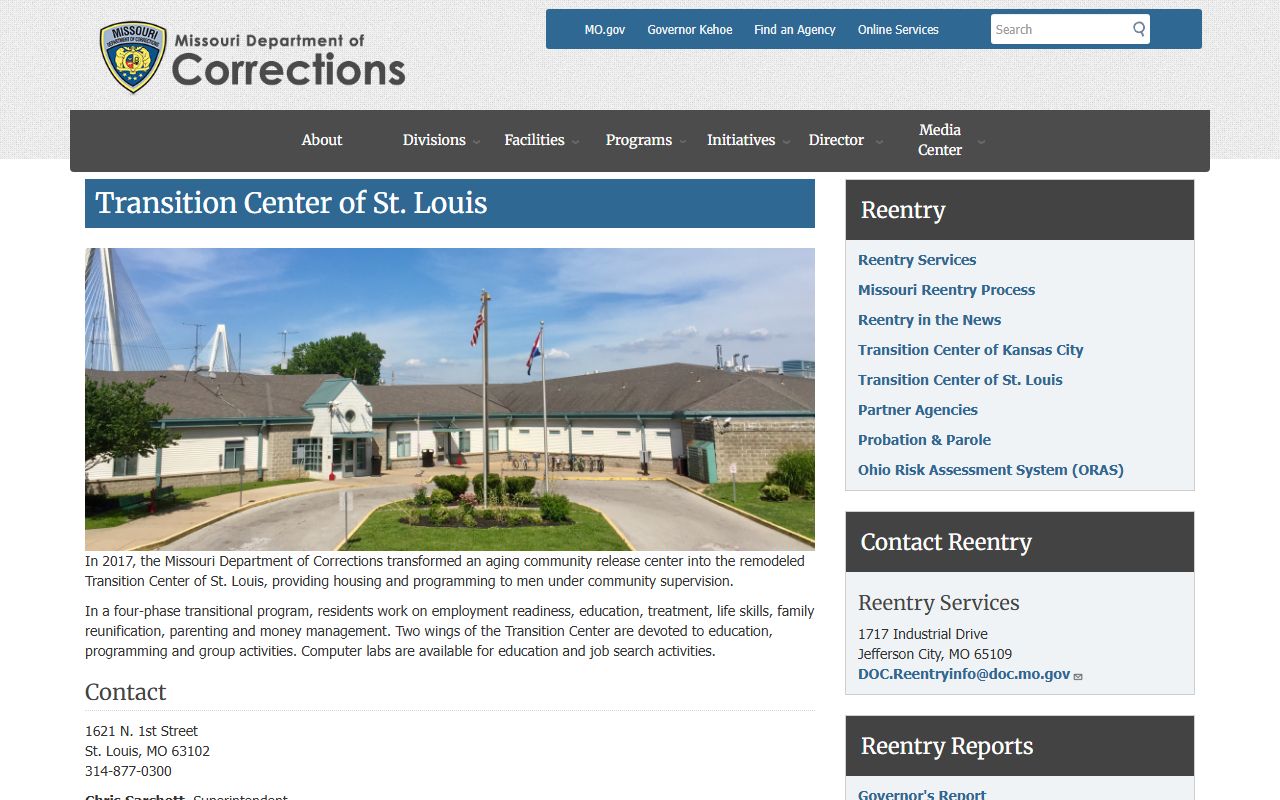
The page is important because it places the facility in Missouri DOC reentry, not in the St. Louis City jail system.
Transition Center Custody Type
Transition Center of St. Louis is part of the state corrections and community supervision path. Its residents are not the same population as people newly arrested by SLMPD and held at City Justice Center. A person at the Transition Center may be transitioning from prison, may be under parole or probation supervision, or may be living in a structured residential setting while working through release goals. That is why the Missouri DOC Offender Web Search is the correct lookup source.
| Question | Transition Center of St. Louis | City Justice Center |
|---|---|---|
| Operator | Missouri Department of Corrections, Division of Probation and Parole | City of St. Louis Department of Public Safety, Division of Corrections |
| Population | Men under community supervision or released from adult institutions who need transitional services | People arrested by police, people awaiting court, and locally sentenced inmates |
| Lookup source | Missouri DOC Offender Web Search | St. Louis City inmate locator |
| Role | Residential reentry and community release | Local jail custody |
No official capacity number for the Transition Center was located in the research sources. Because capacity was not sourced, no capacity stat block is included for this facility. Population figures for CJC should not be applied to the Transition Center.
Transition Center Offender Lookup
Use the Missouri DOC Offender Web Search to look for someone connected to the Transition Center of St. Louis. The DOC search covers active offenders, including probationers and parolees, and searches aliases. It does not provide information on discharged offenders. DOC also warns that some people may be excluded for safety, security, or confidentiality reasons. Specific status questions should go to an institutional caseworker or the Probation and Parole field officer rather than the St. Louis City jail.
- Open the Missouri DOC Offender Web Search, not the St. Louis City inmate locator.
- Enter the person's first name and last name, including known aliases when appropriate.
- Complete the CAPTCHA letters or numbers shown on the DOC form.
- Review active offender, probation, or parole results and check the listed location or supervising unit.
- If the result is unclear, contact DOC staff or the assigned field officer for current status.
| Field Label | Type | Required | Notes |
|---|---|---|---|
| First Name | Text | Unspecified | Searches active offenders, including aliases. |
| Last Name | Text | Unspecified | Use the legal name and known aliases when available. |
| CAPTCHA letters/numbers | Text | Yes | Required before the search can run. |
| Submit/Search | Button | n/a | Runs the offender search against DOC data. |
The MODOC locator page is the source for the statewide offender search form and active-offender notice.
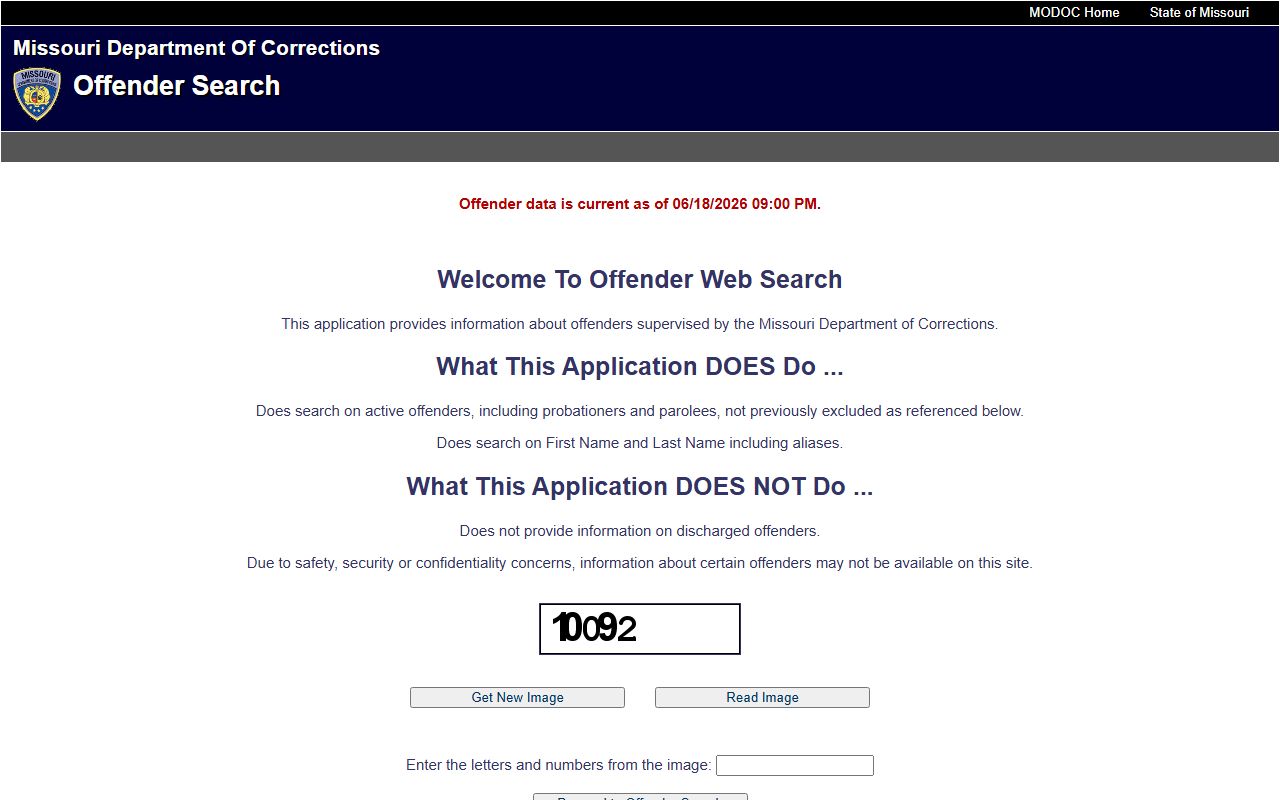
The DOC locator screenshot helps distinguish state supervision records from the CJC local jail search form.
Transition Center Contact
The Transition Center has its own DOC contact path. Calling City Justice Center about a Transition Center resident can send the question to the wrong agency because CJC is the local jail. The official DOC page and the DOC CSC/CRC address listing both confirm the Transition Center address and phone. Questions about current program status, facility rules, visits, passes, or supervision should start with the Transition Center or the assigned DOC supervision contact.
Transition Center of St. Louis
1621 North First Street
St. Louis, MO 63102
314-877-0300
Missouri DOC residential reentry facility
DOC Superintendent
Chris Sarchett
Chris.Sarchett@doc.mo.gov
Listed on the official DOC Transition Center page
Use DOC channels for state-supervision questions.
Transition Center Visits
The inspected Transition Center page did not publish a facility-specific visitation schedule. Research also notes that CJC visitor approval rules should not be copied to the Transition Center. Missouri DOC visiting guidance gives statewide context: regular visits are generally Friday-Sunday with two time blocks, but times vary by facility and some diagnostic or treatment centers have limits. The safest course is to verify with Transition Center staff before planning a visit.
| Source | Documented Visiting Detail | Use for Transition Center |
|---|---|---|
| Transition Center official page | No specific visitation schedule was located in the inspected page. | Call 314-877-0300 before traveling. |
| Missouri DOC visiting overview | Regular visits are generally Friday-Sunday, 9:30 a.m.-1:30 p.m. and 2:30-6:30 p.m.; times vary. | Treat as statewide context, not a guaranteed TCSTL schedule. |
| DOC approved visitor rules | Approved visiting lists are capped at 20 visitors for offenders not in diagnostic or treatment status. | Confirm whether the resident is eligible for visits. |
Community release status can also affect movement. The four-phase model includes overnight or weekend passes as a resident nears discharge planning, but the DOC source does not make those passes a general visitor entitlement. Approval depends on the resident's plan and supervision status.
Transition Center Program Phases
DOC describes a four-phase reentry model. Phase I Intake includes a tour, orientation, a facility work assignment, assignment to a probation or parole officer and case manager, assessments, and treatment planning. Phase II Programming provides tailored programs and weekly case staffing or progress reports. Phase III Pre-Release Planning shifts toward family reunification, interview skills, job search, money management, and home economics. Phase IV Discharge Planning continues program work, identifies mentors, and may include overnight or weekend passes as discharge plans come closer.
- Community release
- A structured state-supervision setting that supports release planning instead of new local booking custody.
- Probation
- Court-ordered supervision in the community, sometimes with residential programming or treatment conditions.
- Parole
- Supervised release after prison, with DOC rules and a supervising officer.
- Discharge planning
- The final reentry stage that lines up housing, work, mentors, treatment, and approved movement.
Transition Center Services
The official DOC page gives the strongest detail about programming. Residents work on employment readiness, education, treatment, life skills, family reunification, parenting, and money management. Computer labs are available for education and job-search work, and two wings are set aside for education, programming, and group activities. That program design is why the facility should be framed as reentry and supervision rather than jail detention.
DOC lists a broad community partner network for the Transition Center and reentry process. Research identified Criminal Justice Ministries, Affinia Healthcare, Fathers & Families Support Center, Employment Connection, Anthropedia Foundation, Preferred Family Healthcare, Gateway Foundation, St. Louis Public Schools, St. Patrick Center, St. Louis Public Library, VA, and Missouri higher education or workforce agencies among the partner ecosystem. Those names help explain the local reentry function, but they do not replace official DOC status checks.
Transition Center Mail and Money
The research did not locate a Transition Center-specific commissary or money-deposit fee schedule. Because no official TCSTL deposit fee was captured, no deposit fee table is included. Families should not use the City Justice Center kiosk, CSG Pay instructions, or CJC inmate master number process for a DOC Transition Center resident unless DOC staff specifically directs them there. The agency, facility type, and resident status are different.
Mail, phone, visit, and financial rules can depend on whether the person is in residential reentry, on a pass, in another DOC location, or supervised by a field officer. The DOC offender search and the Transition Center phone number are the right starting points. A current location result may also tell whether the person has moved from the Transition Center to a different DOC facility or field supervision unit.
Missouri DOC Context
Missouri DOC manages the statewide sentenced-offender and supervision system. Research notes that DOC manages 21 correctional centers, with 19 for men and two for women, and uses custody levels that range from minimum to maximum. No adult institution prison was located inside St. Louis City in the official facility review, but the Transition Center of St. Louis is a DOC residential reentry and community supervision facility in the city. That makes it relevant to St. Louis City custody searches, while still separate from CJC.
DOC data has limits. The DOC Sunshine page says offender data may include people who are or have been under department supervision and that some data depends on self-reporting. The offender search does not cover discharged offenders and may exclude some active offenders for security or confidentiality reasons. For local jail bookings, use City Justice Center and the city inmate locator. For state supervision or reentry residents, use DOC.
Note: Confirm location and visit eligibility with DOC before traveling to the Transition Center.